Salome is one of the largest and most important, next to Elektra, works by Richard Strauss (1864-1949). This one-act opera was written in 1905, and the author of the libretto is the composer himself, who was inspired by Oscar Wilde's drama of the same name. As a result, Salome is a German adaptation of Wilde's play, originally written in French. The premiere of the work took place on December 9, 1905 in Dresden. The show was considered controversial due to its overly bold depiction of eroticism. In the end, Salome won critical acclaim and earned the title of one of the opera masterpieces of the 20th century.
The opera takes place in the palace of King Herod in Galilee and tells the biblical story of Princess Salome. The girl enchants Herod with her beauty and, above all, with the Dance of the Seven Curtains. In return, he demands that the head of the imprisoned prophet, John the Baptist (Jochanaana), be brought on a teddy bear.
However, the play in Mariusz Treliński's concept does not refer to biblical times, but the action is transferred to the present. The work becomes a family drama in which the hidden relationships between the household are depicted: between the stepfather - Herod, his adopted daughter - Salome, and the power-hungry mother - Herodias. The game is also played here by the title character and - the elusive object of her obsessive desire - the prophet Jochanaan. Or is he just a voice, a vision? In parallel, the game also takes place between Salome and Herod - her violent stepfather, living in fear of death.
The score of the work is filled with expressionist musical language, and the rich orchestration also attracts attention. In addition, uniqueness is given by the intense emotional and psychological charge of the opera.
At the Wrocław Opera (then Breslauer Stadttheater) Salome was staged very soon after the premiere in Dresden, because already in February 1906 the composer Richard Strauss, who was present at the performance, did not hide his delight, and as a gratitude for the respect and good reception of his work he published official thanks in the pages of the newspaper “Schlesische Zeische Count”.
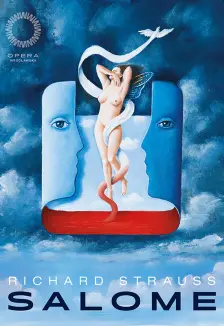
Opera Wrocławska
Salome - Richard Strauss
Tickets
Sold by: opera.wroclaw.pl
50-250 PLN
Go to opera.wroclaw.pl ↗You will be redirected to the partner's website in a new tab.
Salome is one of the largest and most important, next to Elektra, works by Richard Strauss (1864-1949). This one-act opera was written in 1905, and the author of the libretto is the composer himself, who was inspired by Oscar Wilde's drama of the same name. As a result, Salome is a German adaptation of Wilde's play, originally written in French. The premiere of the work took place on December 9, 1905 in Dresden. The show was considered controversial due to its overly bold depiction of eroticism. In the end, Salome won critical acclaim and earned the title of one of the opera masterpieces of the 20th century.
About the event
Comments
Log in to add a comment
Log in
No comments yet
Be the first to comment