The latest Wrocław production of Stanisław Moniuszko's Scary Manor directed by Bruno Berger-Gorski was created at the start of the 2025/2026 artistic season. It was a celebration of the 80th anniversary of the Polish opera scene in Wrocław. On 8 September 1945, the premiere of Halka Stanisław Moniuszko took place in the capital of Lower Silesia. ki, which ushered in the post-war development of a permanent opera scene in the city. The current staging of the Scary Manor will refer precisely to those events when Poles — new residents of Wroclaw — began to build Polish culture on the ruins of the recent Festung Breslau.
History of the work
Stanisław Moniuszko's Terrible Manor is considered one of the composer's most perfect operatic works. The libretto by Jan Checzński was based on one short story from Kazimierz Stanisław Wójcicki's collection of anecdotes Old tales and paintings from 1840. Checzński, however, added to the noble history the themes of Mr. Tadeusz Adam Mickiewicz and Aleksander Fredra's Revenge and Maiden Weddings. All this was intertwined with excellent music by Moniuszko. The story of Stefan and Zbigniew, returning from the war to their homelands, is full of Polish patriotic thought, and at the same time brims with noble humor and optimism. The Terrible Manor is, on the one hand, a romantic and, on the other, a political story about two young nobles who swear to each other that they will always “live in a state of celibacy.” In 1863, the January Uprising broke out, as a result of which the Russian occupier closed the Grand Theater in Warsaw for more than two years. The reopening of the national stage was decided to celebrate with the premiere of the Terrible Manor, which turned out to be an occasion for great patriotic manifestations, with the rest quickly suppressed. The Terrible Manor contains a multitude of noble rituals, which are shown in many details of the work: the polonaise corant, the greeting of returning lords with bread and salt, spinning in the great chamber while singing songs, the rich traditions of divination with wax, or hunting disputes. Homeliness, domesticity and nobility — this was to guide the whole work. After the failed uprising, the strength of the Polish people was to grow out of the past, and consequently — from morality, honor, respect for Tradition. This stood in opposition to the emerging new bourgeois culture, which brought economic considerations to the fore. The show itself was removed from the poster after the third performance. The composer did not see this opera again in his lifetime. The first revival of the Terrible Manor after the tsarist censorship took place in the Austrian partition, in Lviv and Krakow in 1877.
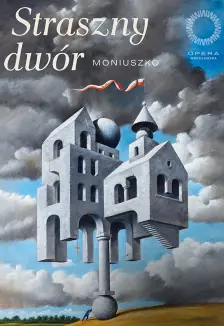
Opera Wrocławska
Terrible manor - Stanisław Moniuszko
Tickets
Sold by: opera.wroclaw.pl
60-300 PLN
Go to opera.wroclaw.pl ↗You will be redirected to the partner's website in a new tab.
The latest Wrocław production of Stanisław Moniuszko's Scary Manor directed by Bruno Berger-Gorski was created at the start of the 2025/2026 artistic season. It was a celebration of the 80th anniversary of the Polish opera scene in Wrocław. On 8 September 1945, the premiere of Halka Stanisław Moniuszko took place in the capital of Lower Silesia. ki, which ushered in the post-war development of a permanent opera scene in the city. The current staging of the Scary Manor will refer precisely to those events when Poles — new residents of Wroclaw — began to build Polish culture on the ruins of the recent Festung Breslau.
About the event
Comments
Log in to add a comment
Log in
No comments yet
Be the first to comment