History knows many cases when a piece wins the hearts of the audience, and critics are disgusted. This is also the case of Toska. After the evening of 14 January 1900, during which it was presented for the first time at the Teatro Constanzi in Rome, a reviewer of Warsaw's “Echoes of Music, Theatre and Artistic” wrote: “The opera itself, I do not think it will survive in its entirety for a long time.” It was one of the milder opinions of critics about Tosca, but viewers were of a different opinion. The tenor already in the first act had to bisce Cavaradossi's aria, and Puccini was forced to appear on the stage. Also repeated were the Te Deum ending the first act, Toski's aria Vissi d'arte, vissi d'amore, and from the last act — Cavaradossi's aria and the final duet. The composer was called more than ten times. At the next performances it was even better and Tosca began a triumphal march through the world (...) Tosca was created during the period of Verism, a trend from the turn of the 19th and 20th centuries, which, thanks mainly to Italian composers, represented an attempt to translate into musical ground the assumptions of the current strongly present in literature called naturalism. Thus, themes from the life of ordinary people, dramatic conflicts were sought for the opera, expression was strengthened to break the sweetness of the melody, wanted to show the true reality. Giacomo Puccini was, after all, too great an individual to be locked in one drawer, although Tosca is in part a veristic opera. The singing in it serves psychological characteristics, and brutality here more than the viewer was used to. Jacek Marczyński
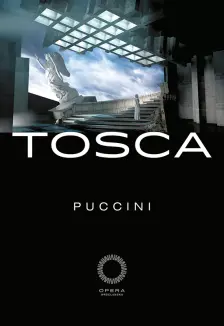
An extremely compact action takes us to Rome in 1800. It is there — in the courtyard of the Castle of the Holy Angel — that we witness an intrigue that turns from love into tragedy. Director Michael Gieleta and set designer Gary McCann take the action to the 1950s. Despite this, the developers faithfully depict the historical sites of the Eternal City along with all the richness of art and architecture of the past centuries.
Opera Wrocławska
Tosca - Giacomo Puccini
Tickets
Sold by: opera.wroclaw.pl
60-300 PLN
Go to opera.wroclaw.pl ↗You will be redirected to the partner's website in a new tab.
History knows many cases when a piece wins the hearts of the audience, and critics are disgusted. This is also the case of Toska. After the evening of 14 January 1900, during which it was presented for the first time at the Teatro Constanzi in Rome, a reviewer of Warsaw's “Echoes of Music, Theatre and Artistic” wrote: “The opera itself, I do not think it will survive in its entirety for a long time.” It was one of the milder opinions of critics about Tosca, but viewers were of a different opinion. The tenor already in the first act had to bisce Cavaradossi's aria, and Puccini was forced to appear on the stage. Also repeated were the Te Deum ending the first act, Toski's aria Vissi d'arte, vissi d'amore, and from the last act — Cavaradossi's aria and the final duet. The composer was called more than ten times. At the next performances it was even better and Tosca began a triumphal march through the world (...) Tosca was founded during the period of Verism, a trend from the turn of the 19th and 20th centuries, which was mainly due to Italian comets
About the event
Comments
Log in to add a comment
Log in
No comments yet
Be the first to comment