Scene: Scene New Situations
Black comedy with elements of Scandinavian horror. Characters drawn from the universe of iconic Norwegian playwright Henryk Ibsen, meet after the death of their father. These are classic figures of family drama: mother, daughter, son, wife, husband. The starting point for the play is not the author's specific dramas, but what remains of them: emotional patterns, the language of trauma — inherited both at home and in the theater. Together we will trace the hidden secrets wrapped in woolen Norwegian sweaters. The ones that bite the most.
IN THE PERFORMANCE, RECORDINGS OF BIRTHS OF VARIOUS SPECIES ARE SHOWN. VULGAR LANGUAGE IS USED. LOUD MUSIC, FLASHING LIGHTS AND INTENSE LIGHT EFFECTS APPEAR.
The play quotes excerpts from Henryk Ibsen's plays “Upiory”, “Wild Duck”, “Hedda Gabler”, “Doll House (Nora)”, “Jan Gabriel Borkman” translated by Valeria Marrené-Morzkowska.
the play was staged at the 58th INTERNATIONAL THEATRE FESTIVAL KONTRAPUNKT (accompanying event)
Teatr Polska is a program organized since 2009 by the Zbigniew Raszewski Theatre Institute. Every year, more than a dozen of the best performances go on a nationwide tour of the houses of culture in places where there is no institutional theater. The aim of the program is to popularize theatrical art and eliminate economic barriers to access the theater. More information: www.teatpolska.pl and www.facebook.com/TeatrPolska.
“The show excites at every level. Kowańska's text is funny and brilliant; Knapik directed it with lightness and flair. The child-red make-up, the kitschy Scandinavian costumes of Klaudia Hegab, the music of Szymon Lechowicz and the makeshift scenography of Knapik create a crazy stage world.
“Acting is based on distance, mechanization of movements and alienation. In some issues, the characters are given a previously recorded voice of a different timbre, which emphasizes the distance separating the actors from the role.
The credibility of the characters is subjected to a deliberate test, the actors, in addition to playing Ibsen roles (sometimes more than one), also speak as employees of the theater in Szczecin and share their thoughts about the created characters. Kowańska and Knapik play cleverly with the contexts of Ibsen's texts, the interpenetration of the biographies of dramatic figures, their contemporary interpretations and elements of Norwegian culture. There is a lot of distance to each other and to the material. An example is the scene in which the heroes of 'Ghosts' put on vampire fangs. Humor can vary from absurd, to intellectually twisted, to rubbish, like Rabelais.
(...) As the creators inform in the program, their goal was to construct a world that is a link in the chain of collective memory. Hence not only Ibsen, but also Leo Tolstoy, Edvard Munch or Nikolai Astrup. Writers, musicians and painters return like ghosts from the past, dictating the present and determining the future. Fortunately, all this postmodern intertextuality is successively pierced with laughter. The more concepts viewers decipher, the better fun they will have.”

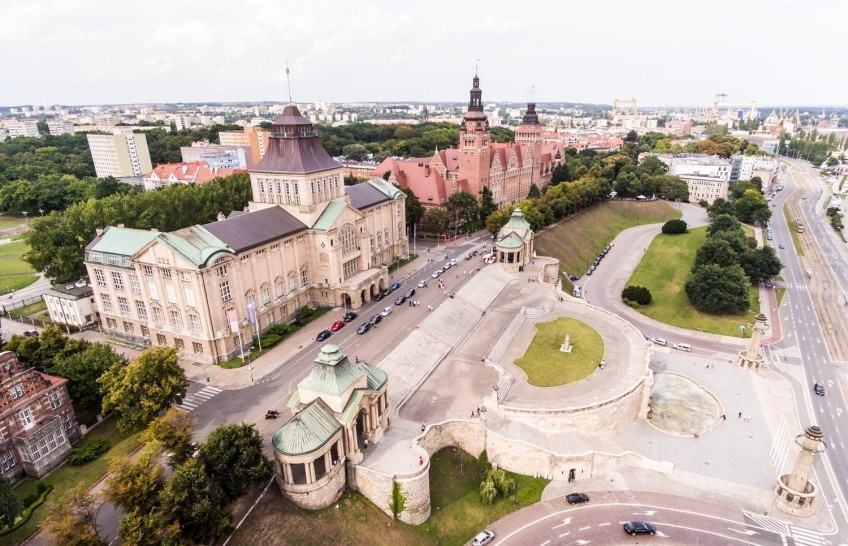 Teatr Współczesny – Scena Nowe Sytuacje (dawna Malarnia)
Very Ibsen
Tickets
Sold by: teatr.ligo.pl
wg cennika
Go to teatr.ligo.pl ↗You will be redirected to the partner's website in a new tab.
About the event
Comments
Log in to add a comment
Log in
No comments yet
Be the first to comment